Educational
Beyond Dark: Milk, White, Ruby, and the Whole Chocolate Spectrum (No Snobbery)
A friendly tour of every kind of chocolate — dark, milk, white, dark milk, inclusion bars, and the curious case of ruby — with a defense of the ones snobs love to dunk on and an honest explanation of the one that's barely legal.
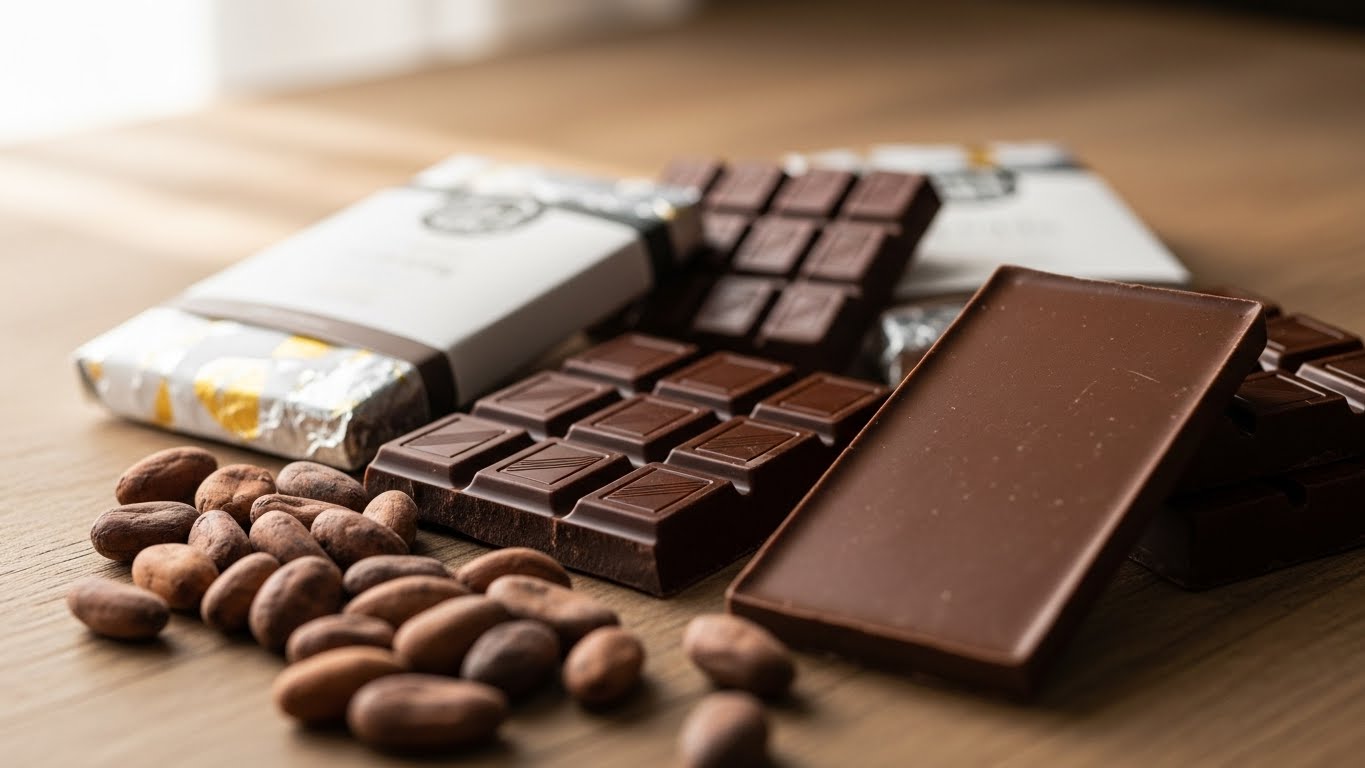
Break a square of good milk chocolate in a warm room and you can feel it go — that soft give, then the melt across the tongue, caramel and toasted milk before any cocoa even shows up. Snap a high-percentage dark bar and it's the opposite: a sharp crack, a slow bloom of fruit or roast, sometimes a tannic grip at the back like strong tea. Same plant. Wildly different experiences. And somewhere along the way, somebody decided one of these was "serious" and the other was for kids.
We'd like to gently retire that idea. There is no chocolate hierarchy where dark sits at the top and everything else lines up below it apologizing. There's just a spectrum — dark, milk, white, the in-between bars, the fruit-and-nut ones, and a strange pink newcomer named ruby — and the only real question is whether a given bar is made well and whether you like it. Let's walk the whole spectrum without the lectures.
Dark: the one people assume they're supposed to like
Dark chocolate is cacao, sugar, usually a little extra cocoa butter, and not much else. Because there's nowhere to hide, it's where single-origin flavor shines hardest — the berry notes of a Kauai bean, the bright citrus of another island's, the honey-and-nut depth that careful fermentation coaxes out of island cacao. It's genuinely thrilling chocolate.
But "dark" is a huge range, not a badge. A 55% bar and a 90% bar are barely the same food, and a higher number is a description of how much cacao is in there — not a quality grade and not even a reliable guide to how intense it'll taste. We get into exactly what that number does and doesn't mean in what cacao percentage really tells you, but the short version: nobody is more sophisticated for choosing the 85% over the 70%. They just chose differently.
Milk: not the enemy, and never was
Here's the myth-bust, said plainly: milk chocolate is not the enemy.
It earned a bad reputation honestly — most milk chocolate in the world is cheap candy: lots of sugar, a whisper of cocoa, milk solids doing the heavy lifting, engineered to be sweet and forgettable. But that's a quality problem, not a milk problem. A great craft milk bar — Hawaiian-grown cacao, milk that's there to round the cocoa rather than bury it, sometimes pushed up into the 50% or higher range so the bean still talks — is one of the most delicious things in the case. It beats a mediocre dark bar every single time.
If you've ever quietly preferred milk and felt like you had to apologize for it at a tasting, stop. A great milk chocolate is a real accomplishment, not a beginner's mistake. Buy the bar you actually want to eat.
White: real chocolate, no cocoa solids required
White chocolate gets accused of being a fraud — "it's not even chocolate." Technically it's cocoa butter (the fat pressed from the cacao bean), sugar, and milk, with the brown cocoa solids left out. That's why it's pale, and why it tastes of cream, vanilla, and butter instead of roast and bitterness.
Cheap white chocolate deserves some of the side-eye: a lot of it swaps real cocoa butter for other fats and is basically sweet wax. But good white chocolate, made with actual cocoa butter, is a quietly gorgeous thing — and in skilled hands it becomes a canvas for everything from toasted-milk caramelization to citrus and sea salt. It came from the cacao bean. It counts.
Dark milk and inclusion bars: the fun middle
Two categories worth knowing because they're where makers play:
- Dark milk is exactly what it sounds like — milk chocolate built at a higher cacao percentage. You get milk's roundness and the bean's character at the same time, which is why it converts a lot of self-described "only dark" people. It's the friendly handshake between the two camps.
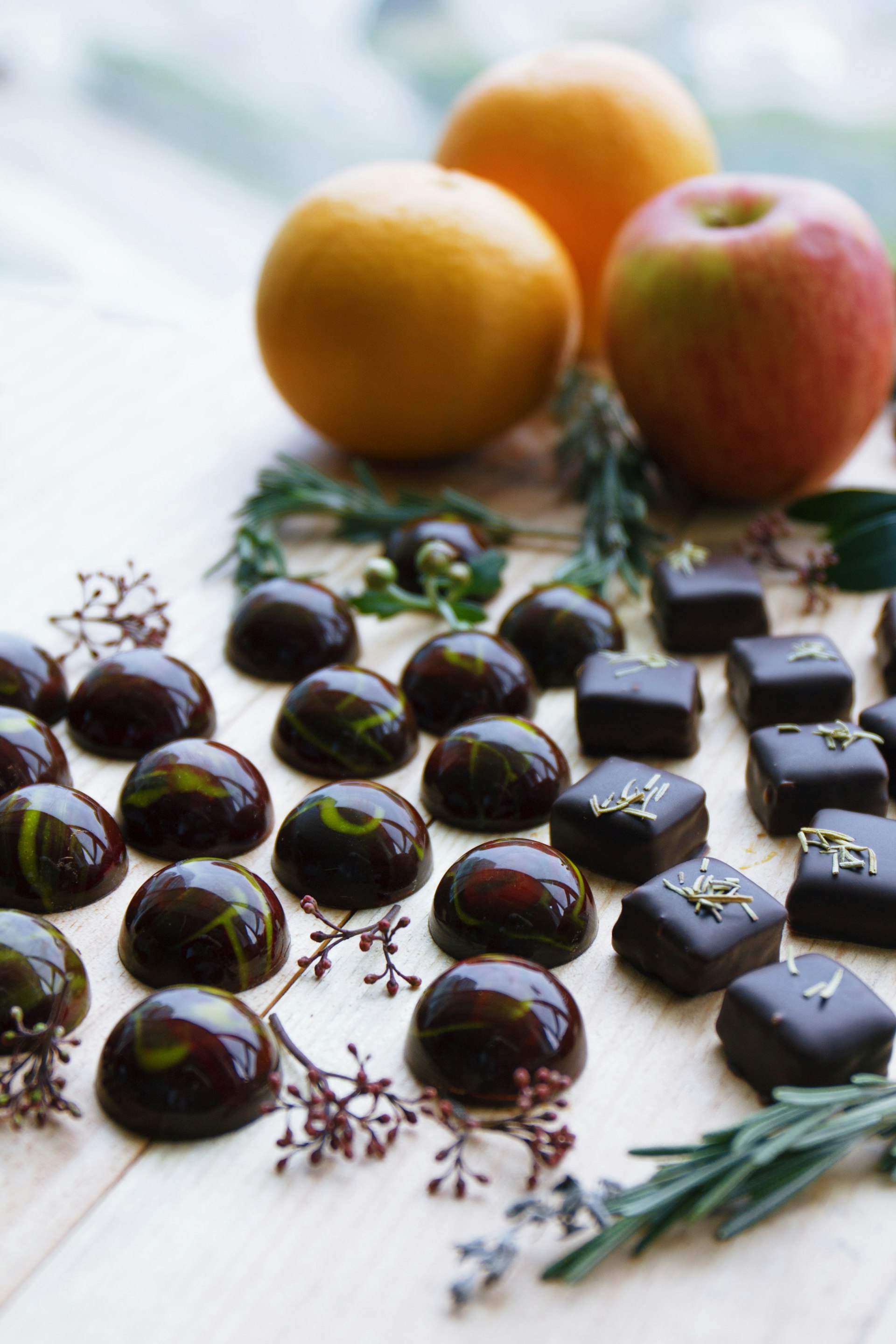
- Inclusion bars are chocolate plus something stirred in or scattered on: sea salt, toasted macadamia nuts, coffee, dried fruit, crispy bits. Snobs sometimes wave these off as gilding the lily, but a great inclusion bar is an art of balance, and a Hawaiian-grown bar studded with locally grown mac nuts is about as "of this place" as chocolate gets.
None of these are training wheels. They're just more rooms in the same house.
Ruby: the pink one everybody asks about
Then there's ruby — the chocolate that looks like it was tinted with a strawberry milkshake. It's worth explaining honestly, because it's neither the miracle its marketing suggests nor the scam its critics claim.
Here's what's actually true. Ruby was unveiled in 2017 by Barry Callebaut, one of the world's largest chocolate manufacturers, and pitched as the "fourth type" of chocolate after dark, milk, and white — the first new category in something like 80 years. It's a proprietary product: it's made from beans the company calls "ruby cocoa beans" through a patented process they've largely kept secret, so unlike dark or milk, no other maker can simply decide to produce "ruby" from scratch. The color and the tart, berry-ish, white-chocolate-adjacent flavor are, by the company's account, drawn out of the bean itself — no berries added, no dye.
That last claim is where the skepticism lives. Independent observers note the process relies on relatively unfermented beans (which keeps the natural pink pigment intact) plus an acidification step, and citric acid shows up on the ingredient list — which is a big reason its legal standing is still unsettled. In the United States, ruby doesn't yet meet the federal standard of identity for "chocolate," so the FDA has only granted Barry Callebaut a temporary marketing permit to sell it under that name while it gathers data — not a permanent blessing. In plain terms: ruby is allowed to call itself chocolate for now, on a provisional basis, pending a final ruling.
So what do you do with that? Taste it if you're curious — it's a genuinely novel flavor, fruity and tangy and unlike anything else in the case. Just hold it skeptically, the way you'd hold any single-company novelty backed by a big marketing budget. And know that ruby is essentially an industrial product, not a craft or origin one. Because the supply runs through one manufacturer, you won't find a true Hawaiian-grown ruby bar — island makers work with their own fermented island cacao, which is the whole point of what they do. If a "Hawaiian ruby" turns up somewhere, read the label closely before assuming the pink came from a Hawaiian tree.
How to actually shop the spectrum
Forget the hierarchy. A better way to choose:
- Want the cleanest expression of a single farm's flavor? Reach for dark or dark milk, single-origin.
- Want comfort, creaminess, a crowd-pleaser? A well-made milk or white bar, no apologies.
- Want playful, snackable, gift-friendly? Inclusion bars — bonus points for Hawaiian-grown cacao and Hawaiian mac nuts.
- Want a conversation piece? Ruby, with eyes open.
The throughline is the same one that runs under all of this: quality within a category beats category dogma, every time. A superb milk bar from a maker you can name — one who pays the grower a direct-trade price, often several dollars a pound against the 50–80 cents commodity cocoa fetches — is "better chocolate" than a dull dark bar with an intimidating number on the front. Tasting is democratic — trust your own tongue, and when you find the bar you love, eat it with abandon.
If you're building a sampler that spans the spectrum, our guide to gifting Hawaiian chocolate is a good next stop — it's full of island makers working in dark, milk, and everything between.
Curious which Hawaiian makers cover the most ground? Explore Hawaiian chocolate makers near you and taste your way across the whole spectrum.
Keep reading
Related Articles
42 places on the map
Explore Hawaiian Chocolate
Discover 42 cacao farms, bean-to-bar makers, and tasting experiences across the Hawaiian islands.