The short answer
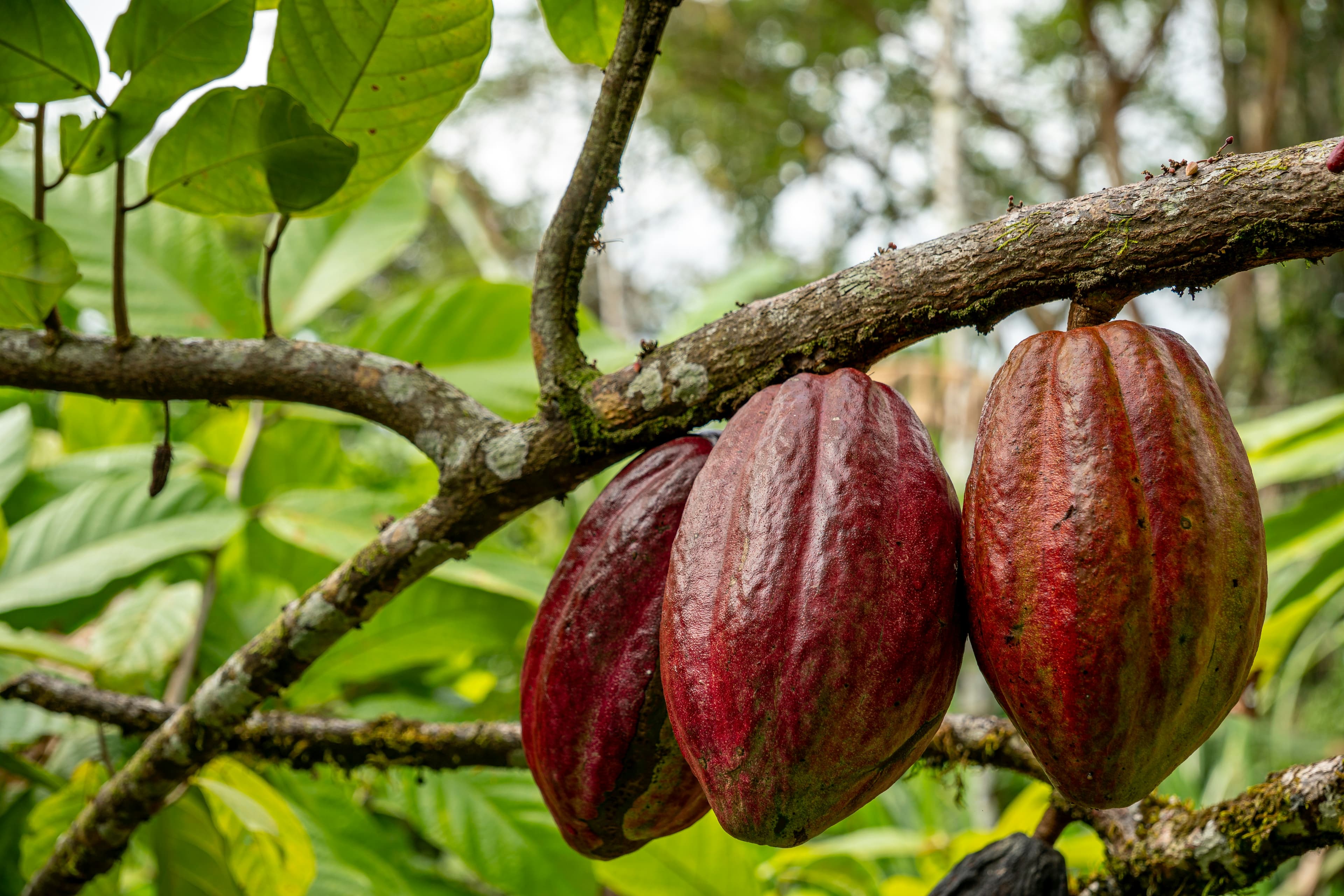
Cacao grows as pods on trees, usually in warm and humid areas with wind protection and thoughtful shade. In Hawaii, suitable sites are scattered across island microclimates rather than spread evenly across every place visitors go.
After harvest, the beans inside the pod are fermented and dried before they can be roasted and made into chocolate.
The orchard stage
Visitors usually notice cacao pods first because they grow directly from the trunk and branches. Pod color does not tell the whole story; farmers judge ripeness by variety, sound, color change, and experience.
Because the crop is sensitive, farms often use sheltered sites, mixed plantings, and careful pruning to manage wind, sun, and moisture.
The post-harvest stage
Fresh cacao beans are surrounded by sweet pulp. Fermentation transforms that pulp and creates flavor precursors inside the beans. Drying then stabilizes the beans for storage and later chocolate making.
This is why farm tours that show fermentation boxes, drying racks, or processing areas are more educational than a tasting alone.
How to choose a visit
Choose a farm-tour listing when you want trees, pods, and post-harvest context. Choose a tasting room or factory when you want to focus on finished chocolate and maker style.
